Hiking Blood Mountain Georgia's Highest AT Peak With the Bear Canister Rule
Blood Mountain requires a hard-sided bear canister for all overnight campers—chronic bear activity at the historic stone shelter made the rule permanent in the Chattahoochee National Forest.
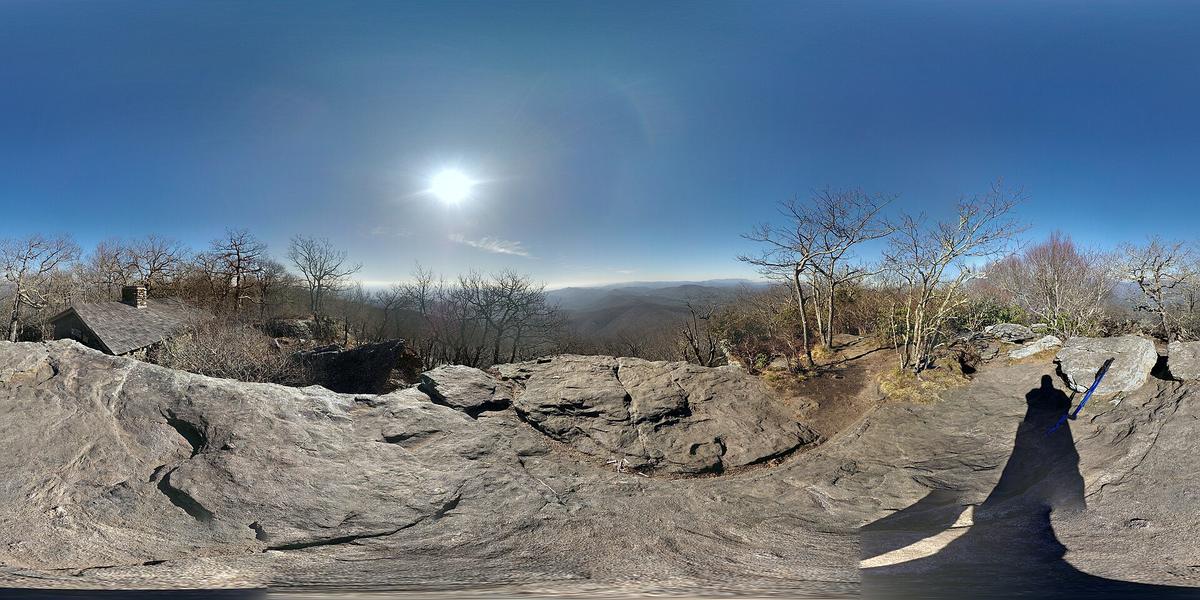

Why You Must Carry a Bear Canister to Overnight on Blood Mountain
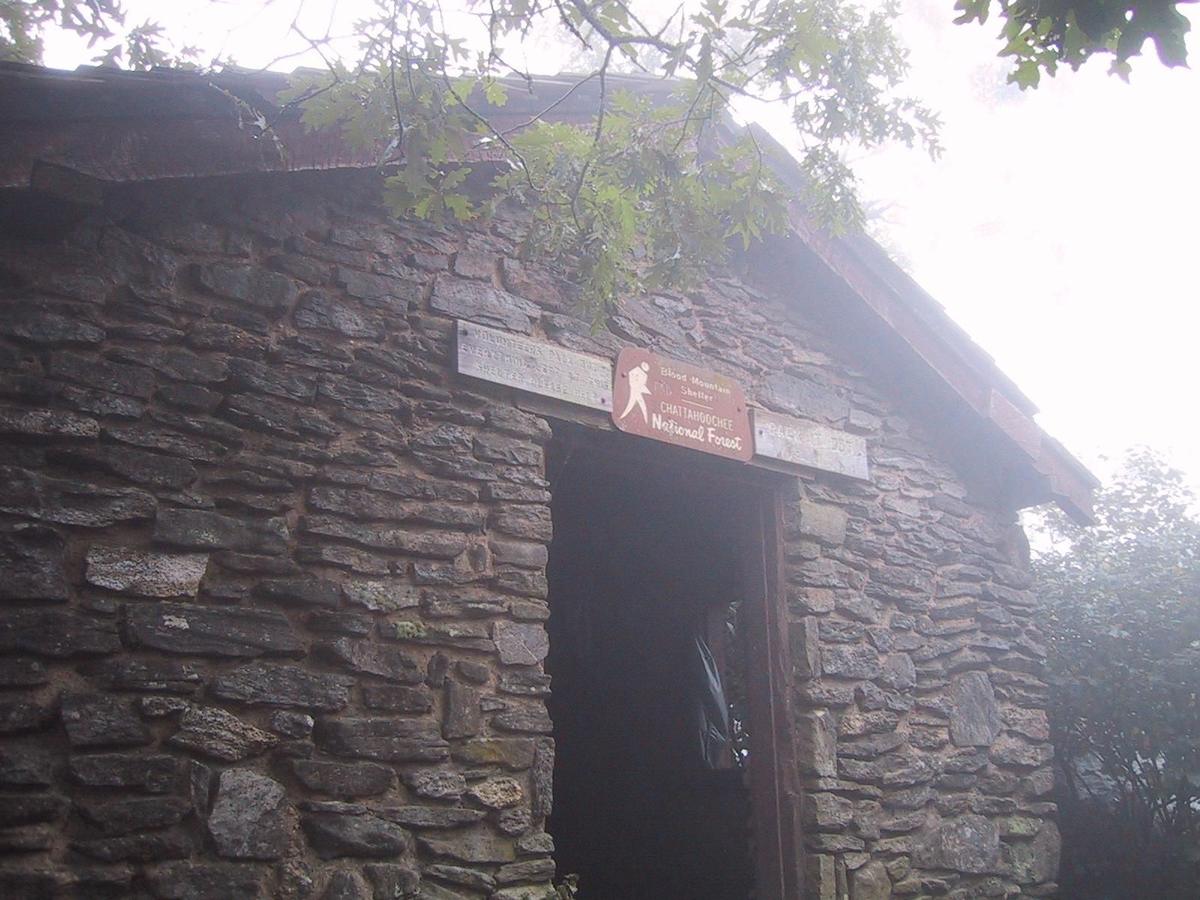
If you camp overnight anywhere on the Blood Mountain section of the Appalachian Trail in Georgia, federal regulation requires you to carry a commercially manufactured hard sided bear resistant canister. The historic stone shelter at the summit, built by the Civilian Conservation Corps in 1934, became a chronic bear problem zone. Years of thru hikers and weekend backpackers storing food inside taught bears that the two room stone cabin with its missing windows and deteriorated roof was a reliable food source. The Forest Service stepped in with a mandatory canister requirement. It applies annually from March 1 to June 1 within the Blood Mountain Wilderness on the AT between Jarrard Gap at mile 26.1 and Neels Gap at mile 31.7. Violating it means a fine. More importantly, it means you are part of the problem that keeps getting bears killed.
- Summit Elevation: 4,458 ft
- Neels Gap Elevation: 3,109 ft
- Byron Reece Trailhead Elevation: approx. 3,100 ft
- Byron Reece to Summit Distance (One Way): 2.15 mi
- Byron Reece to Summit Elevation Gain: approx. 1,350 ft
- Neels Gap to Summit Distance (One Way via AT): 2.4 mi
- Neels Gap to Summit Elevation Gain: approx. 1,350 ft
- Byron Reece Round Trip Time: 3, 4.5 hours
- Neels Gap Round Trip Time: 3, 5 hours
- Bear Canister Requirement Area: Blood Mountain Wilderness on the AT between Jarrard Gap (mile 26.1) and Neels Gap (mile 31.7)
- Bear Canister Enforcement Period: March 1 to June 1 (annual)
- Enforcement Agency: USDA Forest Service
- Canister Specification: Commercially manufactured, hard sided bear resistant canister
- Blood Mountain Shelter Construction Year: 1934
- Blood Mountain Shelter Builder: Civilian Conservation Corps
- Blood Mountain Shelter Condition: Deteriorated; roof intact, windows missing, interior graffiti, no bunks. Overnight use prohibited.
The Regulation and the History Behind it
The mandatory canister rule is not a suggestion. It covers every overnight stay in the Blood Mountain Wilderness on the AT corridor from Jarrard Gap to Neels Gap. That is a 5.6 mile stretch of trail that includes the summit structure and several dispersed camping sites. The enforcement period runs March 1 through June 1, but responsible hikers carry a canister year round here. The cabin itself is closed to overnight use. Its roof is still intact, but the windows are gone, the interior is covered in graffiti, and there are no bunks. You cannot sleep inside it.
What Happened At The Cabin
The CCC built the two room stone cabin in 1934 as a trail refuge. For decades hikers stored food inside the stone walls. Bears learned to associate the building with easy meals. By the 2010s the problem was severe enough that the Forest Service mandated hard sided canisters instead of the soft bags and hangs that work elsewhere. The logic is simple: bears on Blood Mountain know how to open soft bags and defeat hangs. A hard sided canister is the only container they cannot break into. The rule is not punitive. It is an attempt to keep bears from becoming food conditioned and dangerous, which ends with the bear being euthanized.
Where To Get A Canister In Blairsville Or Dahlonega
If you do not own a bear canister, buy or rent one before you drive up the mountain. Mountain Crossings at Walasi Yi in Neels Gap is a historic stone building constructed by the CCC where the Appalachian Trail passes directly through the breezeway. The outfitter sells and rents hard sided canisters. Blairsville has outfitters that carry them as well. In Dahlonega, the southern terminus of the AT approach trail, several outdoor shops stock canisters. Rent one for around $5 to $10 per day or buy one for $70 to $90. Do not show up at the trailhead expecting to borrow one from another hiker. That is a plan that fails.
Two Routes to the Summit
Both standard routes up Blood Mountain are serious. The elevation gain from either trailhead to the summit is roughly 1,350 feet. The distance is short enough that you can do it as a day hike but steep enough that you will earn every foot. The Southern Appalachians deliver mist on ridgeline beauty and deep quiet. The terrain is physically demanding. Short hikes can mean 1,000 foot elevation gains, and weather flips from sun to sideways rain in 20 minutes. Cell service is nonexistent across most of the backcountry. Download offline maps before you leave Wifi.
From Neels Gap Via The Appalachian Trail
Neels Gap sits at 3,109 feet. The AT passes through the breezeway of Mountain Crossings at Walasi Yi. Park in the lot at the outfitter. Do not leave valuables visible in your car. The trail climbs 2.4 miles one way to the summit. The first mile is the steepest, with rock steps and granite slabs that are slippery when wet. You gain about 1,350 feet total. Budget three to five hours round trip. The advantage of this route is that you start at the outfitter, so you can buy fuel, rent a canister, or get current trail conditions from the staff. The disadvantage is that the parking lot fills early on weekends in October and during thru hiker season from mid March to mid April.
From Byron Reece Trailhead
Byron Reece trailhead starts at approximately 3,100 feet, a few miles north of Neels Gap on US 19. The hike is 2.15 miles one way with the same 1,350 foot elevation gain. The trail is less crowded than the Neels Gap route and the parking lot is larger. The path climbs through a hardwood forest, then opens onto rock outcrops with views south toward the Chattahoochee River valley. The last half mile is a scramble over granite slabs. Budget three to four and a half hours round trip. This is the better choice if you want a shorter hike with more parking. It is the worse choice if you need to resupply or rent gear at the last minute.
The Summit and the Structure
The summit of Blood Mountain at 4,458 feet is the highest point on the Appalachian Trail in Georgia. The view is panoramic and immediate. To the north you see Brasstown Bald, the highest peak in the state. To the south the Blue Ridge ridges roll out in layers of blue grey. The stone cabin sits just below the summit. Do not plan to sleep in it. The roof leaks, the stone floor is uneven, and the site is actively monitored for bear activity. Photograph the 1934 CCC stonework, then move on. If you are camping overnight, find a designated site well away from the cabin and store your canister the same distance from your tent. The Forest Service enforces this. Rangers patrol the area during the March to June window.

Common Questions
Can I use a bear bag or Ursack instead of a hard canister on Blood Mountain?
No. The Forest Service requires a commercially manufactured hard sided bear resistant canister between Jarrard Gap and Neels Gap. Soft bags, Ursacks, and counterbalance hangs do not meet the regulation. Use only a hard sided canister.
Is the bear canister rule in effect year round or only March through June?
The formal enforcement period is March 1 to June 1 annually. However, bear activity continues year round. Carry a canister every time you overnight in the Blood Mountain Wilderness. Rangers can still cite you outside the enforcement window if you store food improperly.
Can I day hike Blood Mountain without a bear canister?
Yes. The canister rule applies only to overnight camping. If you hike up and back in a day from Neels Gap or Byron Reece, you do not need a canister. Carry your food in your pack and pack out all trash.
Where exactly does the bear canister requirement start and end on the AT?
It covers the AT corridor within the Blood Mountain Wilderness from Jarrard Gap at mile 26.1 to Neels Gap at mile 31.7. That is a 5.6 mile stretch. If you camp anywhere inside that boundary, you need a hard canister.
Read next
-
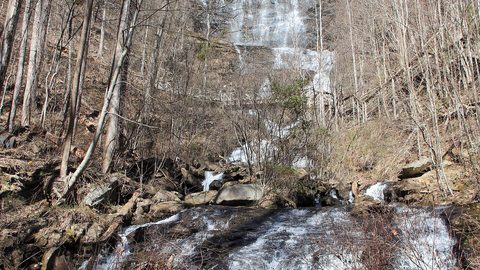
 Amicalola Falls and the Approach Trail
The Appalachian Trail Approach Trail begins with a 604-step staircase up Amicalola Falls—the first brutal test for thru-hikers before they even reach Springer Mountain.
Amicalola Falls and the Approach Trail
The Appalachian Trail Approach Trail begins with a 604-step staircase up Amicalola Falls—the first brutal test for thru-hikers before they even reach Springer Mountain.
-
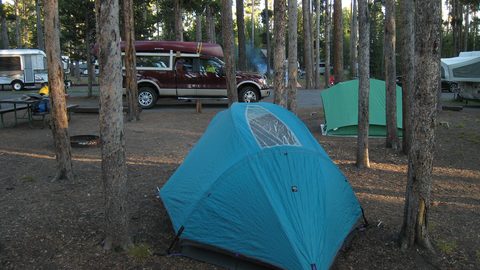 Where to Stay in the Southern Appalachians, From Backcountry Shelters to Roadside Motels
A guide to Southern Appalachian lodging: vintage Parkway motor courts, trail-town motels, cabin clusters, and backcountry shelters, with price bands and booking lead times.
Where to Stay in the Southern Appalachians, From Backcountry Shelters to Roadside Motels
A guide to Southern Appalachian lodging: vintage Parkway motor courts, trail-town motels, cabin clusters, and backcountry shelters, with price bands and booking lead times.
-
 Southern Appalachians Trail Towns Where to Base Yourself and When to Camp Instead
Match your Southern Appalachians trip to the right trail town—compare Bryson City, Brevard, Hot Springs, Dahlonega, and more by activity, lodging type, and peak-season availability.
Southern Appalachians Trail Towns Where to Base Yourself and When to Camp Instead
Match your Southern Appalachians trip to the right trail town—compare Bryson City, Brevard, Hot Springs, Dahlonega, and more by activity, lodging type, and peak-season availability.
-
 Flying Into the Southern Appalachians, Airport by Airport
Compare AVL, TYS, and CLT airports for the Southern Appalachians: drive times, rental-car costs, and why a personal vehicle is non-negotiable.
Flying Into the Southern Appalachians, Airport by Airport
Compare AVL, TYS, and CLT airports for the Southern Appalachians: drive times, rental-car costs, and why a personal vehicle is non-negotiable.
-
 Best Time to Visit the Southern Appalachians for Trails and Quiet
Season-by-season timing for the Southern Appalachians, including mud-season trail closures, October leaf-peeper gridlock, and June rhododendron blooms.
Best Time to Visit the Southern Appalachians for Trails and Quiet
Season-by-season timing for the Southern Appalachians, including mud-season trail closures, October leaf-peeper gridlock, and June rhododendron blooms.
-
 Getting Around the Southern Appalachians Without a Transit System
How to get around the Southern Appalachians when there is no transit, cell service drops, and GPS routes you onto impassable roads.
Getting Around the Southern Appalachians Without a Transit System
How to get around the Southern Appalachians when there is no transit, cell service drops, and GPS routes you onto impassable roads.
-
 Your First Week in the Southern Appalachians Built Around Weather Not a List
-
 Blue Ridge and Pisgah
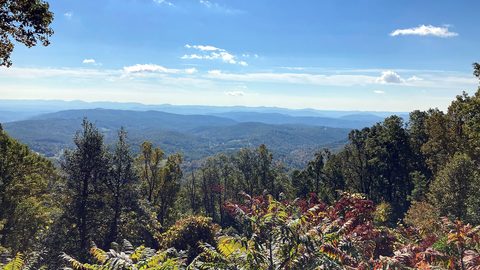
The Asheville and Pisgah side of the Southern Appalachians along the Blue Ridge Parkway, with waterfall loops, craft breweries, and Mount Mitchell.
Blue Ridge and Pisgah
The Asheville and Pisgah side of the Southern Appalachians along the Blue Ridge Parkway, with waterfall loops, craft breweries, and Mount Mitchell.
-
 Great Smoky Mountains
A Great Smoky Mountains guide focused on quiet gateways like Bryson City and Townsend, dawn wildlife viewing at Cades Cove, and avoiding Gatlinburg crowds.
Great Smoky Mountains
A Great Smoky Mountains guide focused on quiet gateways like Bryson City and Townsend, dawn wildlife viewing at Cades Cove, and avoiding Gatlinburg crowds.