Cabins, Campgrounds, and Motor Lodges Across the Southern Appalachians
A guide to Southern Appalachian lodging: vintage Parkway motor courts, trail-town motels, cabin clusters, and backcountry shelters, with price bands and booking lead times.
Southern Appalachian Lodging, Cabins, and Campgrounds: A Shelter Typology
The fog lifts off the Blue Ridge Parkway and you see the roof of a 1950s motor lodge below a ridgeline. You have not made a reservation. The office is dark. That is the gamble you take when you treat this region like a spontaneous road trip, except the gamble rarely pays off in peak season. The Southern Appalachians do not have a hotel problem. They have a supply problem, and the supply is deeply seasonal, deeply specific, and deeply resistant to last-minute planning.
Shelter across the Southern Appalachians spans a backcountry lean-to with a dirt floor, a motor court with a window air conditioner, and a cabin where the cleaning fee costs more than the nightly rate. How far ahead you need to act and what you actually get for the price changes by month, by elevation, and by how much discomfort you can tolerate.
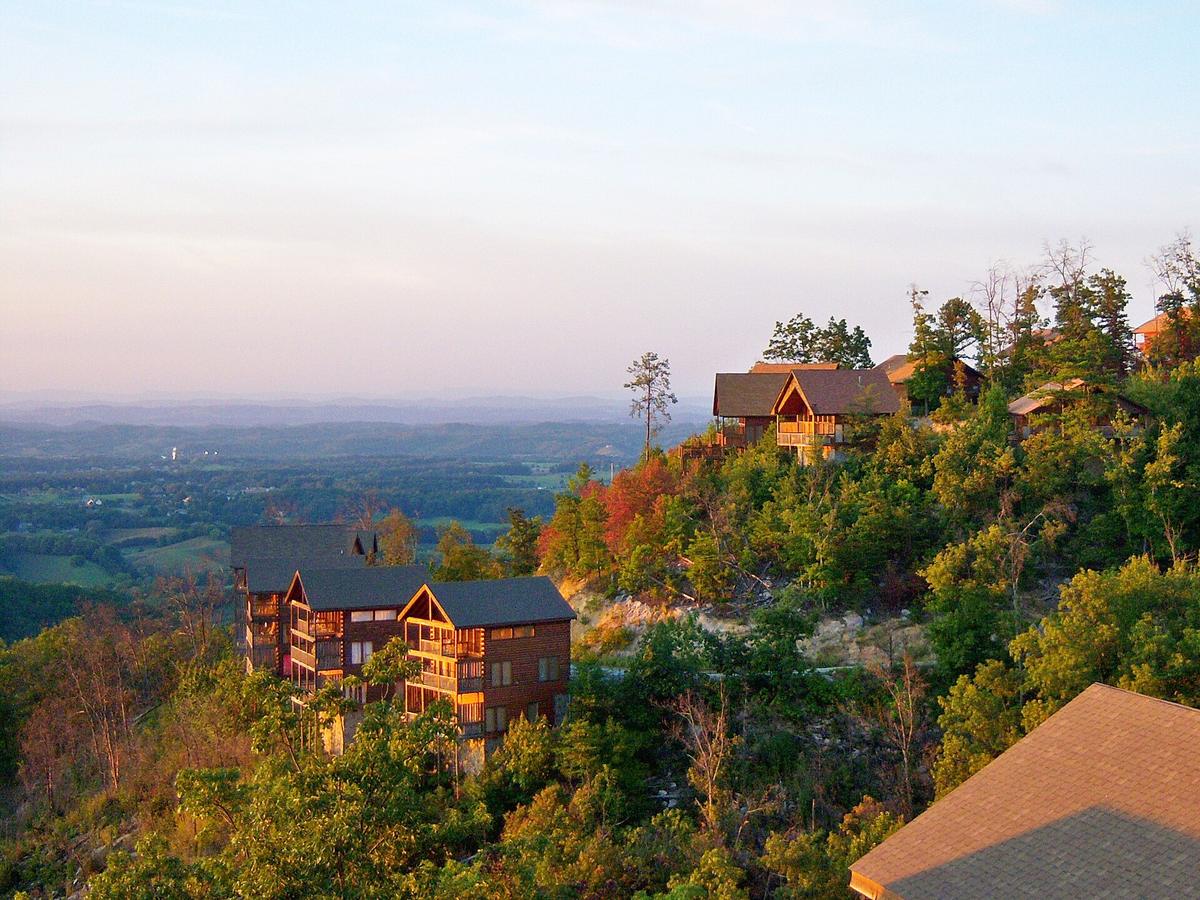

Parkway Motor Lodges: the 1950s Road Trip Remnant
The Blue Ridge Parkway runs 469 miles through the Southern Appalachians, and its historic motor lodges sit on that spine like sleeping cats. You find them at Little Switzerland, Peaks of Otter, and a handful of other ridgeline hamlets where the view costs nothing but the bed costs more than you expect. These are not updated resorts. They are wood-paneled rooms with thin walls, a dresser, and a direct view of the mountain. Some have restaurants downstairs that close at 8 p.m.
What You Actually Get
A peak-season night runs $120 to $200. Off-peak, $75 to $130. What that buys you is a clean bed, a private bathroom, and the ability to walk outside and see nothing but dark forest and stars. It does not buy you soundproofing, reliable Wi-Fi, or a hot breakfast. The restaurant might be open, and might serve eggs, but do not count on either past late autumn.
Booking Lead Time
For a weekend during the fall foliage crush, book 6 months out. The second and third weekends of October are the worst crowding on the entire Parkway, and those motor lodges fill earliest. For July, book 3 to 4 months ahead. For any other month, 4 to 6 weeks is enough. Arrive without a reservation during peak foliage and expect to walk in at dusk, and you will sleep in your car.
Trail Town Motels: the Hiker’s Fallback
Trail towns like Hot Springs, Bryson City, Robbinsville, Erwin, Damascus, Helen, and Franklin exist to catch Appalachian Trail hikers, leaf peepers, and anyone who underestimated the drive times. These motels are not pretty. They are functional, and that is their virtue.
A $90 motel in Robbinsville gives you a clean bed, a window unit, a mini-fridge, and a parking spot directly outside your door. It does not give you a lobby, a pool, or a concierge.
What It Costs
Peak season runs $80 to $180 per night. Off-peak, $50 to $100. The cleaning fee does not apply here, unlike cabins. You pay the rate and you leave in the morning. That simplicity is the appeal. The downside is thin walls, highway noise in some towns, and the distinct possibility that the restaurant next door stops serving dinner at 8 p.m. Arrive after 9 p.m. and you eat gas station food.
Booking Lead Time
For fall foliage weekends, book 3 to 6 months ahead. For July, 2 to 3 months. Any other time, 2 weeks is enough. These motels rarely have online booking systems worth trusting. Call the front desk directly. Ask about the room location. A room facing the road in Hot Springs will not let you sleep past 7 a.m.
Cabin Clusters: the Cleaning Fee Trap
Townsend, Brevard, Boone, and Blowing Rock are saturated with cabin rentals. These range from a one-room pine box with a wood stove to a four-bedroom lodge with a hot tub and a game room. The price looks reasonable until you read the fine print.
That $150 peak-season nightly rate comes with a cleaning fee of $50 to $150 per stay. Book a long weekend and the cleaning fee is close to a third of your total.
What It Costs
Peak season, $150 to $400 per night. Off-peak, $100 to $250. The cleaning fee is non-negotiable. Some companies also add a damage waiver or a booking fee. Always calculate the all-in cost before you click confirm. The upside is privacy, a full kitchen, and a fire pit. The downside: many cabins sit deep in the woods on unpaved roads. Arrive after dark in a sedan and the driveway can ruin your trip.
Booking Lead Time
Fall foliage weekends require 6 months of lead time. July requires 4 months. Try to book a cabin in Townsend for the second weekend of October in September and you will find nothing under $500 a night, and that unit will be a converted shed. The cabin market is driven by the same vacation rental platforms that dominate the Smokies, and the inventory is smaller than it looks. Book early or skip the category entirely.
.jpg)
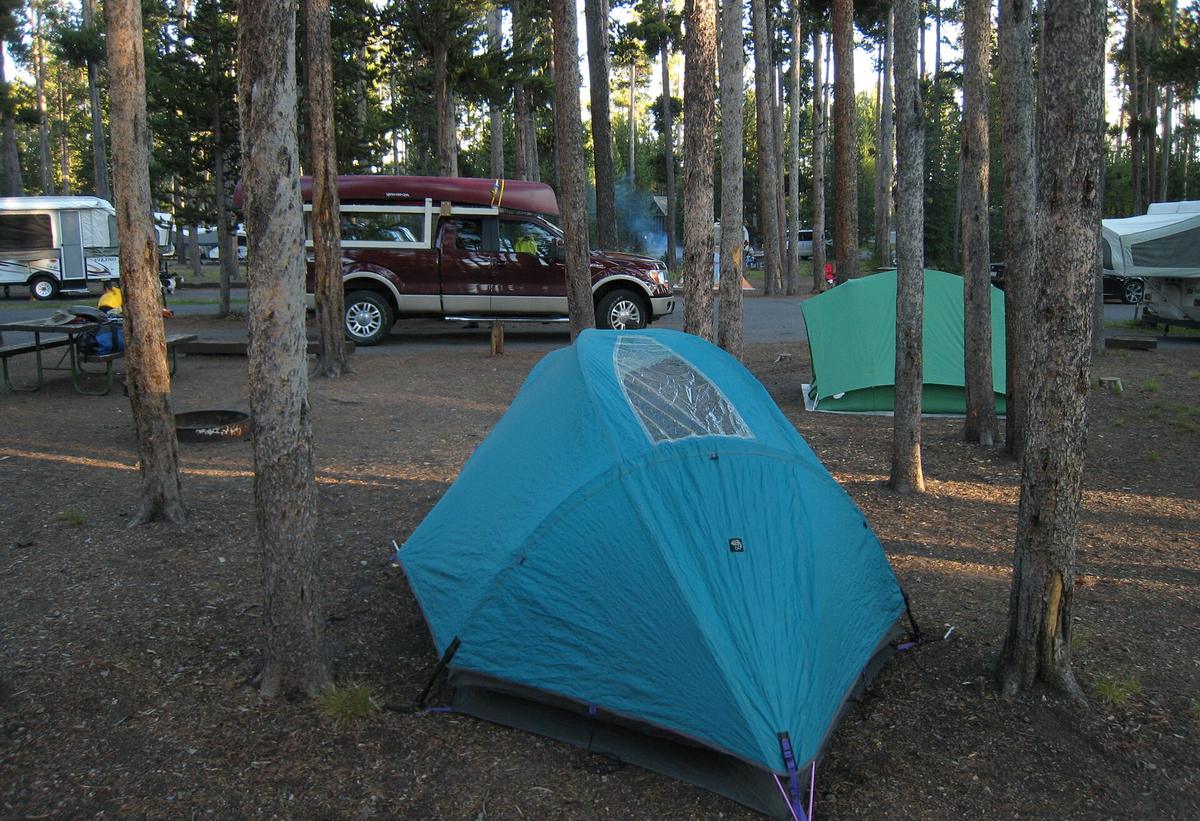
| Campground Type | Reservation Window | Peak Fee | Off-Peak Fee | Walk-Up Availability |
|---|---|---|---|---|
| National Park Frontcountry (GSMNP) | 6 months in advance, rolling on recreation.gov | $25 to $36 | $17.50 to $25 | Some sites at Balsam Mountain, Big Creek, Cataloochee, Cosby, and Smokemont |
| Forest Service Campgrounds (Nantahala, Pisgah, Cherokee, etc.) | 6 months on recreation.gov for reservable sites | $10 to $30 | $10 to $30 | 50% to 70% of sites at many campgrounds are first-come |
| Dispersed Camping (National Forests Only) | None | Free | Free | Always, but follow distance rules: 100-200 ft from water, 100-500 ft from roads and trails |
| LeConte Lodge (Hike-In) | Lottery: apply Oct 1-31 for the following year | $154.50 per person per night (includes dinner and breakfast) | N/A | No walk-ups. Lottery only |
Backcountry Shelters and Permitted Sites: the Commitment Tier
Want to sleep in a lean-to on the Appalachian Trail or pitch a tent in Linville Gorge? The price drops to zero but the planning cost increases sharply. Dispersed camping in the Nantahala, Pisgah, Cherokee, Chattahoochee, and Jefferson National Forests is free, with a 14 consecutive day stay limit per 30 day period. But free does not mean easy. You must camp at least 100 feet from water sources and 100 to 500 feet from roads and trails. You must carry everything in and out. Cell service does not exist. And the weather can switch from 75 degrees to 45 degrees with sideways rain inside 20 minutes.
Great Smoky Mountains National Park is the exception to this freedom. No dispersed camping is allowed there. You can only backcountry camp with a permit, and those permits are managed through a separate quota system covered on the permits page. The other famous exception is LeConte Lodge, hike-in only, 5.5 to 8.7 miles one way depending on the trail. The lottery for its 60 beds opens October 1 for the following year. You apply by October 31. Miss that window and you cannot stay there. Period.
What It Costs
LeConte Lodge runs $154.50 per person per night, and that includes dinner and breakfast. Dispersed camping in national forests is free. Backcountry permits in the Smokies have a fee but that is covered on the permits page. AT lean-tos are free on a first-come basis, but the shelters fill early on popular sections, especially near Max Patch and the Roan Highlands.
Booking Lead Time
LeConte Lodge requires 12 months of forward planning. National forest dispersed camping requires none, but you need to arrive early to claim a spot at popular areas like Linville Gorge. National park frontcountry campgrounds require 6 months for reservations, though some sites are first-come. For a fall backpacking trip in the Smokies, apply for your backcountry permit at 6 months out. For a July trip, 3 months is fine. For November, you can walk up and find space.
Common Questions
Should I book a cabin or a motel for a week in July?
Book a cabin only if you want a kitchen and privacy, and are willing to pay the cleaning fee. Book a motel if you plan to be out from dawn to dusk and just need a bed. The motel saves money and avoids the cleaning fee, but you eat every meal out.
Can I show up without a reservation in October?
No. October peak foliage weekends are the second and third weeks of the month. Every frontcountry campground in the Smokies is booked 6 months out. Every trail town motel within 50 miles of the Parkway is booked 3 months out. Showing up without a reservation in October means sleeping in your car or driving 2 hours west to find a room.
What is the cheapest lodging option that is not a tent?
A trail town motel off-peak. In November, a room in Hot Springs or Erwin runs $50 to $80. The room will not be nice, but it will be dry and have heat. That beats a cabin or a national park lodge by a wide margin.
How far ahead do I need to book for July?
National park frontcountry campgrounds open on a 6 month rolling window, so a July 15 stay opens for booking on January 15. Cabins in Townsend and Brevard require 4 months lead time. Trail town motels require 2 to 3 months. If you wait until June to book a July trip, you will stay in motels or dispersed camp.
Is dispersed camping safe for a solo hiker?
Safe from other people, yes. But the terrain is demanding and weather flips fast. You must carry a paper map, a way to filter water, and a tent that handles wind. The risk is not crime. The risk is a twisted ankle 4 miles from the car with no cell service.
Can I stay at LeConte Lodge if I miss the lottery?
No. There are no waitlists, no standby, and no cancellations that get reopened to the public. The lottery in October is the only way in for the following year. If you miss it, you hike in and out the same day, or you camp at the backcountry sites on the trail.
Should I book a forest service campground first-come or reserve?
Reserve if you need a guaranteed spot for a specific date, especially July and October. First-come works well if you arrive by noon on a Tuesday through Thursday. Never rely on first-come for a Friday night in peak season unless you can arrive before 10 a.m.
Read next
-
 Southern Appalachians Trail Towns Where to Base Yourself and When to Camp Instead
Match your Southern Appalachians trip to the right trail town—compare Bryson City, Brevard, Hot Springs, Dahlonega, and more by activity, lodging type, and peak-season availability.
Southern Appalachians Trail Towns Where to Base Yourself and When to Camp Instead
Match your Southern Appalachians trip to the right trail town—compare Bryson City, Brevard, Hot Springs, Dahlonega, and more by activity, lodging type, and peak-season availability.
-
 Flying Into the Southern Appalachians, Airport by Airport
Compare AVL, TYS, and CLT airports for the Southern Appalachians: drive times, rental-car costs, and why a personal vehicle is non-negotiable.
Flying Into the Southern Appalachians, Airport by Airport
Compare AVL, TYS, and CLT airports for the Southern Appalachians: drive times, rental-car costs, and why a personal vehicle is non-negotiable.
-
 Best Time to Visit the Southern Appalachians for Trails and Quiet
Season-by-season timing for the Southern Appalachians, including mud-season trail closures, October leaf-peeper gridlock, and June rhododendron blooms.
Best Time to Visit the Southern Appalachians for Trails and Quiet
Season-by-season timing for the Southern Appalachians, including mud-season trail closures, October leaf-peeper gridlock, and June rhododendron blooms.
-
 Getting Around the Southern Appalachians Without a Transit System
How to get around the Southern Appalachians when there is no transit, cell service drops, and GPS routes you onto impassable roads.
Getting Around the Southern Appalachians Without a Transit System
How to get around the Southern Appalachians when there is no transit, cell service drops, and GPS routes you onto impassable roads.
-
 Your First Week in the Southern Appalachians Built Around Weather Not a List
-
 Southern Appalachian Food, From Trail Resupply to Meat-and-Three Plates
Practical food guide for the Southern Appalachians: where to eat after a hike, where to resupply, and what to expect when restaurants close by 8:30 p.m.
Southern Appalachian Food, From Trail Resupply to Meat-and-Three Plates
Practical food guide for the Southern Appalachians: where to eat after a hike, where to resupply, and what to expect when restaurants close by 8:30 p.m.
-
 Blue Ridge and Pisgah
The Asheville and Pisgah side of the Southern Appalachians along the Blue Ridge Parkway, with waterfall loops, craft breweries, and Mount Mitchell.
Blue Ridge and Pisgah
The Asheville and Pisgah side of the Southern Appalachians along the Blue Ridge Parkway, with waterfall loops, craft breweries, and Mount Mitchell.
-
 Great Smoky Mountains
A Great Smoky Mountains guide focused on quiet gateways like Bryson City and Townsend, dawn wildlife viewing at Cades Cove, and avoiding Gatlinburg crowds.
Great Smoky Mountains
A Great Smoky Mountains guide focused on quiet gateways like Bryson City and Townsend, dawn wildlife viewing at Cades Cove, and avoiding Gatlinburg crowds.
-
 North Georgia
's quiet end of the Southern Appalachians, from Springer Mountain's AT start to Dahlonega's wine trail and Tallulah Gorge's permitted floor.
North Georgia
North Georgia's quiet end of the Southern Appalachians, from Springer Mountain's AT start to Dahlonega's wine trail and Tallulah Gorge's permitted floor.